
Arrest Warrants in Sandoval County
In Sandoval County, an arrest warrant is court process that grows out of a criminal filing plus a judge's finding of probable cause. Rule 5-208, along with Forms 9-209 and 9-210, sets the local structure. The warrant must be signed, and it has to identify the person by name or description, name the offense, and state the court process behind it. The public Case Lookup can help you find a case, though it is not a warrant-only roster. For current status, go to the issuing district or magistrate clerk rather than a search screen. Entries inside law-enforcement systems are handled through restricted channels. And where a person lives in the county does not decide the forum, since the case may belong to district, magistrate, municipal, tribal, or federal court.
Probable Cause in the Local Form
Form 9-209 collects the sworn facts that support probable cause, while Form 9-210 carries the fields a judge uses for the command itself: the offense, the execution area, the signature, and the return. Together they show what a Sandoval County arrest warrant record can contain without exposing any real affidavit or any person's case. Read Form 9-209 and Form 9-210 for the official layout. A form shows the structure. It does not prove a particular warrant exists.
Inside a Sandoval County Arrest Warrant
The public record for a Sandoval County warrant may show only part of the court form. A field-by-field view helps you ask the clerk one clear question instead of trusting a name match.
| Schema number | NM-SANDOVAL-ARREST-SCHEMA-004, fictional and not a live record. |
|---|---|
| Person field | Name or description used by the court, subject to access limits. |
| Offense | Charge and statute or ordinance identified by the issuing court. |
| Execution area | Geographic choices in the warrant, not a promise of county-only service. |
| Return | Service, arrest, release, court action or removal information. |
Ask the Sandoval County clerk which fields are public and which stay in the court or law-enforcement system.
From Affidavit to Signed Warrant
The Sandoval County sequence starts with a criminal filing, sworn facts, or another court-authorized basis. A judge then signs the process. Rule 5-210 requires the person obtaining the warrant to cause it to be entered into a law-enforcement information system. An authorized officer can then receive, verify, and serve it.
Filing or affidavit → probable-cause review → signed court process → system entry → service and return.
The Rule 5-210 source describes officer categories and entry steps for Sandoval County service, but no public lookup screen exists there.
Serving Arrest Warrants in Sandoval County
Rule 5-210 names full-time salaried state, county, municipal, campus, and tribal officers as possible authorized officers. Within Sandoval County, the Sheriff's Office serves District and Magistrate Court process, transports prisoners, and handles extradition, while municipal police remain the primary local agency inside incorporated cities. SCSO policy adds that a warrant from outside the jurisdiction is verified through Regional Dispatch under NCIC rules before service, and a service return goes back so the entry can be removed. Tribal and federal service needs separate confirmation. The Sheriff's official agency overview explains jurisdiction and service functions. None of this makes every county office a public warrant clerk.
Outside Warrant Verification Is Internal
A warrant from another county or state may be checked by officers through law-enforcement systems. The public cannot query NCIC or Regional Dispatch directly. New Mexico DPS describes NCIC as an electronic law-enforcement clearinghouse, not a public statewide warrant search. For a public case question, identify the issuing venue through Case Lookup or your paperwork and call that court. A federal matter belongs with the U.S. District Court for New Mexico or the U.S. Marshals Service. A Sandoval County result, in other words, is never the whole picture.
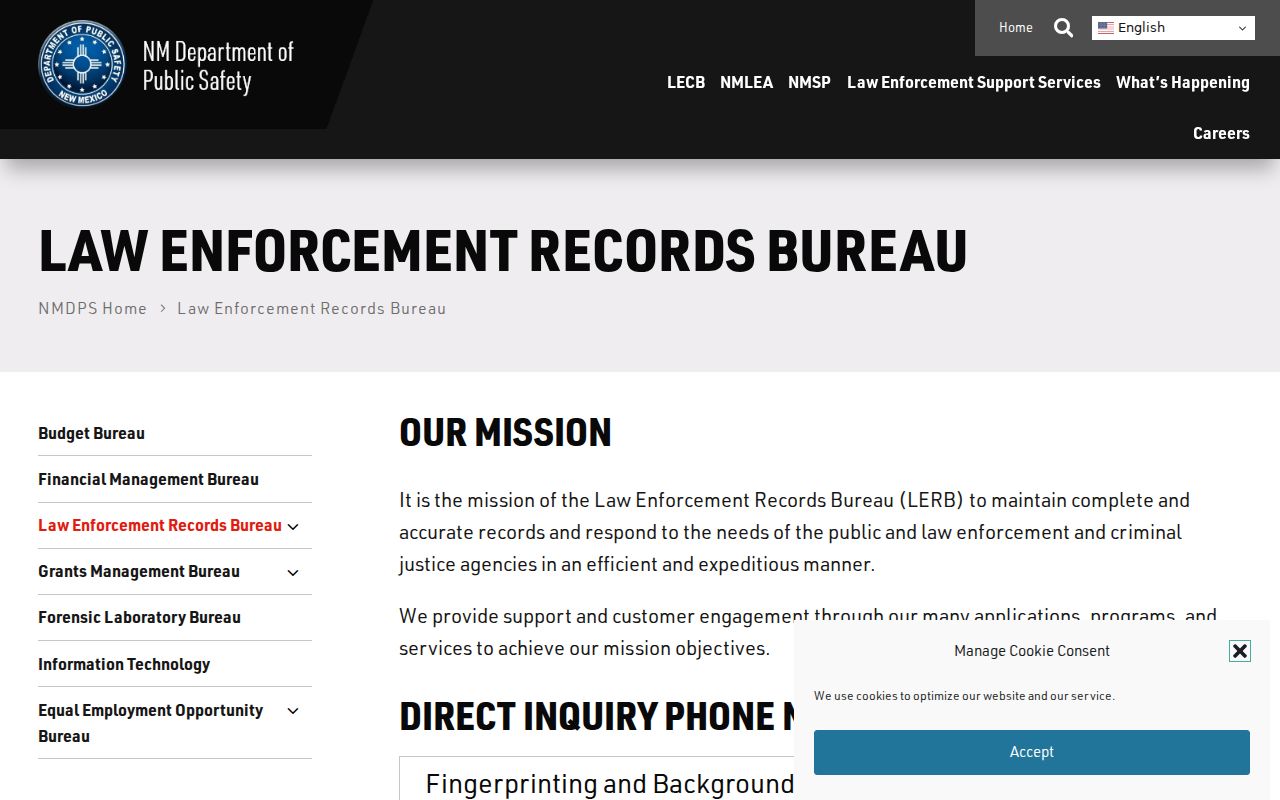
That material is system context only. The court-run resolution model in Sandoval County is a separate public process.
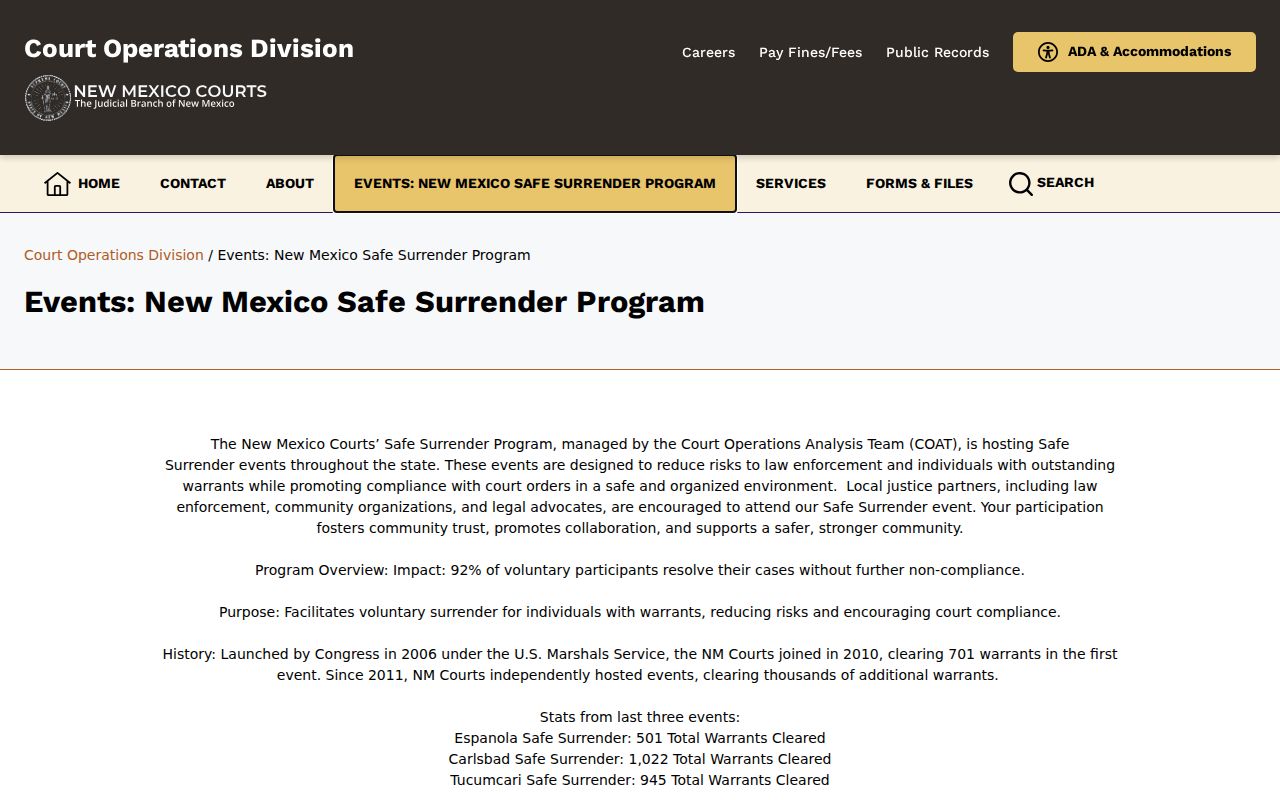
This capture is about court process, not an arrest-warrant roster.
Arrest Warrant Record Contents
Treat the court's record as the authority on the number, offense, issuing judge, dates, and return for a Sandoval County warrant. A public result can omit identifiers, affidavits, or sealed material. A records request may also be limited by an active investigation or a court custodian.
| Field group | Reader’s use | Confirm with |
|---|---|---|
| Case and court | Identify the correct venue. | Issuing clerk. |
| Offense and probable cause | Understand the form’s legal basis. | Court record or counsel. |
| Execution and service | See how the process moved. | Court or authorized agency. |
| Return and removal | Ask whether the system was updated. | Issuing court. |
Arrest Warrants, Summonses, and Bench Warrants
A summons asks a person to appear. An arrest warrant authorizes custody after the court's probable-cause process. A bench warrant addresses a court obligation such as failure to appear, payment, or probation. Rule 5-209 helps separate the criminal-rule arrest process in Sandoval County from a bench warrant.
| Process | Starting point | Local question |
|---|---|---|
| Summons | Notice to appear. | What date and court are listed? |
| Arrest warrant | Filing and probable cause. | What does the issuing court require? |
| Bench warrant | Missed or unmet court obligation. | Can the court reset, recall or set bond? |
Handling an Arrest Warrant in Sandoval County
If you think an arrest warrant exists in Sandoval County, never use a number a caller gives you or a payment link. Locate the court through official New Mexico Courts sources, ask about current status, and speak with counsel about surrender, bond, or an appearance. Walking into the Sheriff's Office will not clear the case by itself.
Use official contacts only: the court controls the warrant and can explain the lawful next step; a public search result cannot make that choice.
New Mexico Courts warns about scams that demand payment. Save the case number, the clerk's response, and any court order from the Sandoval County court.
Restricted Arrest-Warrant Information
Juvenile, sealed, protection-related, and personal-identifier information can be limited, and a public Sandoval County index may not carry the affidavit or every service field. Form 9-114 shows that unsealing is a judicial process with findings and record categories. For a court document, ask the court custodian. For a Sheriff document, use the county's IPRA route and describe the precise record. A request may be delayed, redacted, or redirected if another office owns it. The county public-records page explains the starting route.
What the Sheriff Can Confirm
SCSO can serve process and verify certain law-enforcement information in its operational role, but it does not maintain every Sandoval County court's underlying file. District and magistrate records belong with those courts. Municipal questions belong with the city court.
Thirteenth Judicial District Court
1500 Idalia Road, Building A
Bernalillo, NM 87004
505-867-2376
Use the agency that holds the question.